— Photograph: East coast at low tide —
Zanzibar · East Coast

A small, private community
on the east coast of Zanzibar.

Twelve homes. Owned outright. Launch pricing open until the twelfth unit is reserved.

Scroll
The beginning

Two arrivals, ten years apart from meeting.

In December 2014 we both landed in Paje, some weeks apart. We never met. For years we walked the same strip of east coast, each quietly falling for the island, each carrying the same private dream of a life here.

Three years ago we finally crossed paths, and found the thread: our families had been in the same place all along. Kamila from Poland. Michael from Denmark, Polish at the kitchen table. Both of us speaking the same two languages, both coming home to the same small island.

East is what came out of that slow recognition. Not a fund, not a chain — a private community we are building for ourselves, and for a small circle of fellow dreamers who want to stand here beside us.

Introduction

There are places in the world that still feel like a secret.

Zanzibar is one of them — an island where the morning light arrives slowly over the Indian Ocean, where coconut palms lean toward the water, where the pace of a day is set by the tide and the breeze. For those who have been, the island does not need explanation. For those who have not, no explanation will be enough until they arrive.

This project is a small, private community on the east coast of Zanzibar. Twelve homes — four villas, eight apartments — set behind a gate, woven through tropical gardens, opening toward a beach that remains one of the most beautiful in the world.

This is not a rental. This is not a timeshare. This is a home on Zanzibar — the real thing, owned outright, on a registered title that is yours to keep, pass down, or sell when the time is right. The twelve people who live here will know what they have.

12
Homes
Four villas, eight apartments
300
Steps
From the gate to the beach
99
Years
99-yr leasehold path, ZIPA-route mapped
$100K+
Residency
Every unit qualifies for the Golden Visa
Life On Property

Everything within a short walk of every door.

The community is built for how people actually want to live in Zanzibar — a padel court at the edge of the palms, a yoga pavilion opening to the sea breeze, a pool surrounded by shaded daybeds, a juice bar that opens before sunrise, a co-working space for those who have learned that the best offices have ocean views.

Yoga Pavilion
Open-air, sea breeze. Morning and evening programming daily.
Padel Court
Single regulation court at the edge of the palms. Racquets on-site.
The Table
Pool-side dining, chef's tasting on request. Three courses, six, or twelve.
Co-Working
Quiet room with fiber internet, phone booths, shade from the afternoon sun.
The Juice Bar
Open before sunrise. Cold-pressed, fresh fruit, coffee, quiet company.
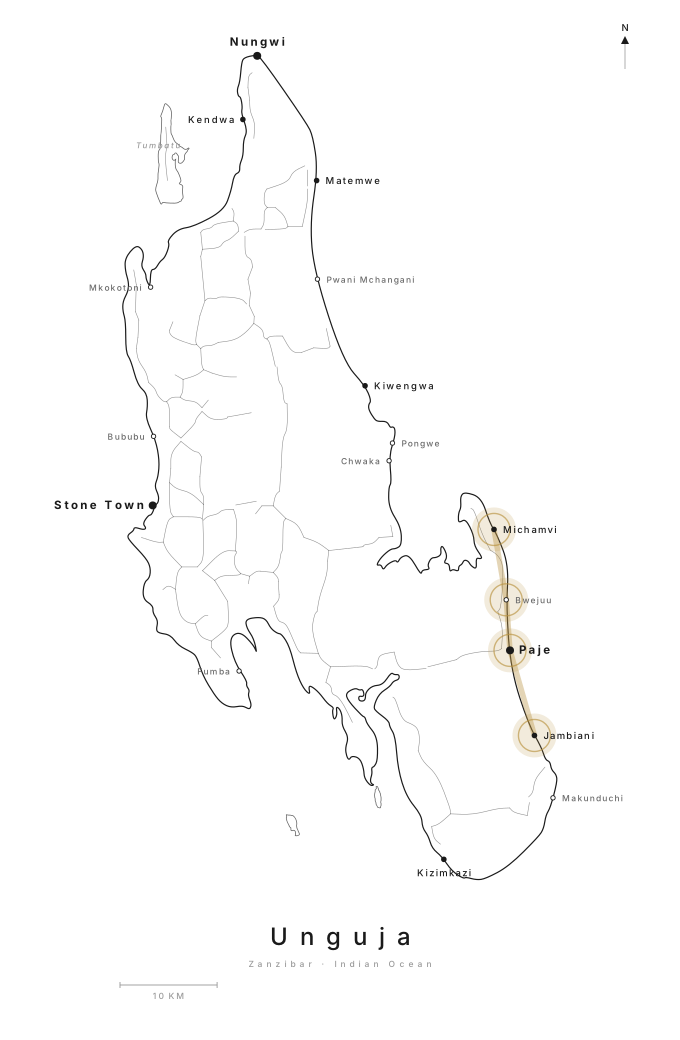
Map of Unguja (Zanzibar). Amber halos highlight Michamvi, Bwejuu, Paje and Jambiani — the east-coast stretch we are scouting.
Scouting · Michamvi → Jambiani
The plot

We are still choosing where.
We know why.

The east coast of Zanzibar — the twenty-kilometre stretch between Paje and Michamvi — is the land we know best. Reef-protected lagoons, low-rise villages, long white beaches, air that hasn't been rebuilt for tourism.

We are scouting now. Six plots under serious review, meetings with the village councils, due diligence on titles, walking the tide at different times of year. The land we choose will be the land we would pick for ourselves — because it is for ourselves.

Expect the decision to land in 2026. The fellow dreamers on the waitlist hear first — a month before anyone else.

The four villages

Four names on a map,
four different mornings.

The stretch we are scouting runs from Michamvi in the north to Jambiani in the south — about twenty kilometres of white-sand coast, one paved road behind it, reef a kilometre off shore. Each village has its own feel. Here is what we know, and what their names mean to the people who have always lived here.

01 · North

Michamvi

Swahili · "the tamarind place"

A peninsula of palms and tamarind trees that separates Chwaka Bay from the open Indian Ocean. The quietest of the four — a handful of high-end stays, the Rock Restaurant on a tidal outcrop, no real nightlife. Michamvi Kae on the west side is the only stretch of Zanzibar's east coast where you can watch the sun set over the sea.

Why we are looking here — the privacy, the two-beach access, the afternoon shade of the tamarinds.
02 · Centre-north

Bwejuu

Swahili · "place of stones" (from bwe, "rock")

The longest uninterrupted white-sand beach on the island, a shallow lagoon at low tide wide enough to walk out into, and coral rag underfoot that gave the village its name. Seaweed farms still worked by women from the same families who started them. Slowly growing — a few small hotels, mostly private homes set back from the dune.

Why we are looking here — the beach is extraordinary and still quiet, and the titles along this stretch are among the cleanest on the coast.
03 · Centre

Paje

Swahili · "a broad, open place" (origin contested, older usage "where dhows unload")

The beating heart of the east coast. Flat reef-protected water that makes Paje the best beginner kite lagoon in Africa. A dozen beach bars, a food market, a sushi counter we own (KAMI), and a permanent population of kiters who never quite leave. Busier than the other three, and that is the point — Paje is where your friends meet you.

Why we are looking here — guests want amenities within walking distance. Paje has them all.
04 · South

Jambiani

Swahili · often linked to jamba — "the hidden place", or to an older settlement name

The most traditional Swahili fishing village of the four. Narrow, walkable, low-rise. Dhows pulled up on the sand every morning. Cafés and small guesthouses owned by the families who live in the coral-stone houses behind them. Quieter than Paje, more settled than Bwejuu, and by far the most intact piece of Swahili village life on the east coast.

Why we are looking here — a village that still works as a village, and where building takes real conversation with the elders.
The design

We are already
drawing the homes.

While the plot is being chosen, the homes are being designed. European architectural discipline applied to Zanzibar's materials. Full-height sliding doors to the garden. Coral-stone feature walls. Dhow-wood beams, brass, linen.

An open kitchen you can entertain from, with the spec of a restaurant line. A waterfall bath outdoors. A pool that disappears into the horizon. Nothing value-engineered.

Early palette — renders of the villa and apartment interiors will follow on request. Ask us for the deck.

Visual direction

The feel of the place
before a single wall is poured.

This is the mood board — reference imagery from other buildings around the world whose rooms we admire. Our own renders are in progress. Until then, this is the air we are aiming for.

Reference imagery only — these are buildings we admire, not our own construction. Final renders of our villa and apartment interiors will follow. Photography via Unsplash — Tommaso Ubezio, Jaipreet Singh, Marc Wieland, Clay Banks, Ari Kurniawan, Wim van 't Einde, Thiago Zanutigh, Moses Londo.

"Twelve homes is a small number on purpose. I want to know each of the twelve families by name. I want to be the person who hands you the keys when the house is ready."

From the founder
Michael Meyer
The Full Brochure

Twenty-five pages. The full story, the units, the terms.

Share a few details and we will send the full brochure to your inbox, along with an invitation to a call with Michael or Kamila.

We will reach out personally within forty-eight hours. Your details are never shared with third parties.
Karibu.
Thank you. The full brochure is on its way to your inbox. Michael or Kamila will be in touch within forty-eight hours.